Heat Load Calculation
If you have ever walked into a building where the AC feels like it is struggling to cool the space, or a room that feels freezing cold while another feels warm, chances are the heat load calculation was either skipped or done incorrectly.
Whether you own a villa in Dubai, manage a commercial building, or are planning a new construction project, understanding heat load calculation is one of the most important steps to getting your HVAC system right. And getting it right saves you money, improves comfort, and extends the life of your equipment.
In this guide, we will break it all down in simple terms, what heat load calculation is, why it matters, and how it is done properly.
What is HVAC and Why is Cooling So Important?
HVAC stands for Heating, Ventilation, and Air Conditioning. It is the system responsible for controlling the temperature, humidity, cleanliness, and air movement inside any building whether it is a home, office, hotel, or warehouse.
In a city like Dubai, where outdoor temperatures regularly climb above 45°C in summer, a properly designed HVAC system is not a luxury it is a necessity. The entire purpose of an AC system is to remove heat from inside a building and keep the indoor environment comfortable for the people inside.
But here is the key point your AC system can only do its job well if it is the right size for your specific building. And the only way to know the right size is through a proper heat load calculation.
What is a Heat Load Calculation?
A heat load calculation is a detailed engineering analysis that measures how much heat enters a building and how much cooling energy the HVAC system needs to remove to keep the space comfortable.
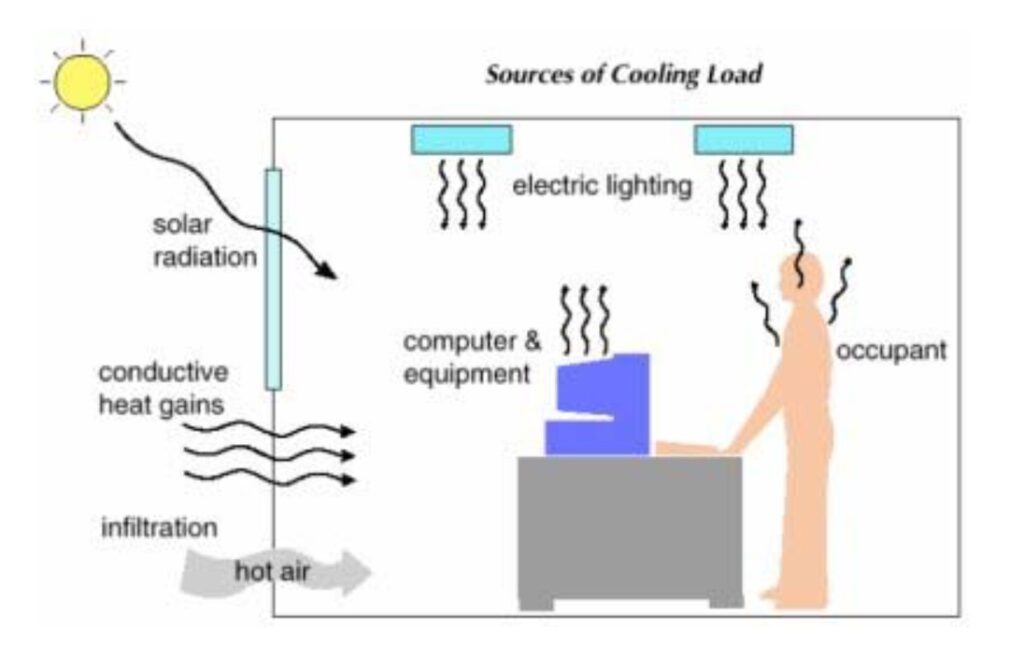
Think of it this way. Your building is constantly gaining heat from multiple sources, the sun beating on your roof, heat conducting through your walls, people working inside, lights running, equipment operating, and hot outside air entering through doors and ventilation. All of this heat adds up. The heat load calculation adds all of these sources together to give a total number expressed in BTU/hr or Tons of Refrigeration (TR).
That total number tells your HVAC engineer exactly what capacity your AC system needs to be.
Why is Heat Gain Not the Same as Cooling Load?
This is one of the most important and most misunderstood concepts in HVAC design.
Heat gain is the amount of heat entering your building at any given moment. Cooling load is the amount of heat your AC system actually needs to remove at that moment. These two numbers are not always the same.
Why? Because building materials like concrete walls, thick roofs, and heavy floors absorb heat first before releasing it slowly into the indoor space. This means the heat you feel inside is often delayed from when it actually entered the building.
The Heat Storage Effect Explained
Imagine your building’s roof absorbs a lot of solar radiation at noon. The roof heats up, but that heat does not immediately enter your room. It gets stored in the roof material first and then slowly releases into the space over the next few hours. This delay is called the heat storage effect.
This is why a well insulated, heavy construction building stays cooler longer, it delays the transfer of heat into the living space. And it is also why a lightweight building heats up much faster.
Understanding this effect is critical for accurate cooling load calculations. If an engineer ignores it, they may overestimate the cooling needed at noon and underestimate what is needed at 5 PM.
What Factors Affect the Cooling Load of a Building?
Every building is different. Two buildings that look identical on the outside can have very different cooling loads depending on a range of factors. Here is what engineers look at:
External Heat Sources
These are heat sources that come from outside the building:
- Building size and ceiling height: Larger spaces naturally have more surface area for heat to enter
- Orientation: A west facing wall in Dubai receives intense afternoon sun and will have a much higher heat load than a north facing wall
- Roof and wall construction: The type of material, thickness, and insulation level all affect how much heat passes through
- Windows: Size, type (single or double glazed), and shading devices (curtains, tinted glass, overhangs) have a major impact on solar heat gain
- Sun exposure and shading: Buildings in full sun gain far more heat than those with shade from trees or adjacent structures
- Air infiltration: Hot outside air leaking in through gaps, doors, and poorly sealed windows adds directly to the cooling load
Internal Heat Sources
These are heat sources generated inside the building itself:
- Occupants: Every person in a building gives off heat. A seated office worker generates around 100W of heat. A crowded room full of people generates significant load
- Lighting: Every light fitting generates heat. High wattage or older lighting types add considerably to the cooling load
- Equipment and appliances: Computers, servers, printers, kitchen equipment, motors, and any electrical device all release heat into the space
- Ventilation air: Fresh outside air brought in for air quality purposes carries heat and humidity that must be handled by the AC system
Components of a Total Cooling Load
The total cooling load of any building is made up of two main parts sensible loads and latent loads.
Sensible Heat Load Sources
| Source | Example |
|---|---|
| Roof | Solar radiation absorbed through the roof |
| Walls | Heat conducted through external walls |
| Windows | Solar radiation and conduction through glass |
| Lighting | Heat generated by all light fittings |
| Occupants | Body heat from people inside the space |
| Equipment | Computers, appliances, motors |
| Ventilation Air | Hot outside air introduced for fresh air requirements |
| Infiltration | Hot air leaking in through gaps and openings |
Latent Heat Load Sources
| Source | Example |
|---|---|
| Occupants | Moisture from breathing and sweating |
| Ventilation Air | Humidity carried in by fresh outside air |
| Infiltration | Humid air leaking into the space |
| Equipment & Appliances | Steam and moisture from cooking or industrial equipment |
Why Proper AC Sizing Matters
Getting the AC size right is not just about comfort it directly affects your running costs, maintenance bills, and how long your equipment lasts.
The Problem with an Oversized AC System
Many people think bigger is better when it comes to AC. This is actually one of the most common and costly mistakes in HVAC.
When an AC unit is too large for the space:
- It cools the air temperature quickly but switches off before removing enough humidity
- The room feels cold and clammy uncomfortable even at the right temperature
- The unit short cycles turns on and off repeatedly in short bursts
- Short cycling puts enormous stress on the compressor, which is the most expensive part of the system
- Equipment wears out faster, leading to more breakdowns and higher maintenance costs
- Energy bills are higher because the system is running inefficiently
The Problem with an Undersized AC System
On the other hand, if the AC unit is too small:
- It runs almost constantly trying to reach the set temperature but never quite gets there
- The space never reaches proper comfort levels especially on the hottest days
- Continuous running causes accelerated wear and tear on all components
- Energy consumption is higher because the system works harder for longer
- You will face more frequent repairs and a shorter equipment lifespan
The goal is a system that is sized just right for your specific building and the only way to achieve that is with an accurate heat load calculation.
How is a Heat Load Calculation Done?
A proper heat load calculation is carried out by a qualified HVAC engineer using either manual calculation methods or professional software. Here is a simplified overview of how it works.
The CLTD/CLF Method Explained Simply
The most widely used manual method for cooling load calculations is the CLTD/CLF method, which stands for Cooling Load Temperature Difference / Cooling Load Factor. It is based on ASHRAE standards and accounts for:
- The time delay in heat transfer through walls and roofs (heat storage effect)
- The direction the building faces (orientation)
- The time of day when peak heat occurs
- Solar radiation through windows
- Internal heat from people, lighting, and equipment
This method allows engineers to calculate the cooling load for each zone of the building separately and then total them up to size the overall system.
What Information Does an Engineer Need?
To carry out an accurate heat load calculation, your HVAC engineer will need:
- Architectural drawings: Floor plans, sections, and elevations to measure areas accurately
- Building orientation: Which direction each wall faces (North, South, East, West)
- Construction details: Wall types, roof type, insulation, floor material
- Window details: Size, type of glass, shading devices
- Occupancy information: How many people use the space and at what times
- Lighting and equipment details: Wattage of all lights and electrical equipment
- Location and climate data: Outdoor design temperature and humidity for Dubai
- Indoor comfort requirements: Desired temperature and humidity levels
The more accurate this information is, the more accurate the calculation and the better your system will perform.
Why You Should Never Skip a Proper Heat Load Calculation in Dubai
Dubai’s climate is one of the most demanding in the world for HVAC systems. Summer temperatures regularly exceed 45°C, and humidity can be punishing especially in coastal areas and during the transitional months of April to May and September to October.
Here is why skipping the heat load calculation is a risk you cannot afford:
- Energy bills in Dubai are significant. An oversized or undersized system wastes electricity every single day
- Daikin, Trane, and other leading brands design their equipment to perform within specific load ranges mismatching equipment to load voids efficiency guarantees
- Villa projects with large glass facades, high ceilings, and open plan layouts have complex heat gain patterns that cannot be estimated by guesswork
- Commercial and facility managers are accountable for comfort and energy performance across large spaces where errors are amplified
- New construction and fitout projects require accurate load calculations to size ductwork, select fan coil units, and design the entire air distribution system correctly
Cutting corners at the design stage always costs more in the long run.
How Vision Air Technical Services Can Help
At Vision Air Technical Services, we have extensive experience carrying out heat load calculations for a wide range of projects across Dubai and the UAE from private villas and residential buildings to commercial offices, retail spaces, and industrial facilities.
As an Authorized Daikin Service Provider, we follow manufacturer and ASHRAE guidelines to ensure every calculation is accurate, site specific, and aligned with the actual conditions of your building.
Here is what we offer:
- Full site inspection and building assessment
- Detailed room by room heat load calculations
- Zone wise cooling load analysis
- Equipment selection and sizing recommendations
- Ductwork and air distribution design support
- Full HVAC proposals with transparent pricing
Whether you are planning a new installation, upgrading an existing system, or troubleshooting comfort problems in your current building our team is ready to help.
📱Contact Vision Air Technical Services today for a professional heat load assessment and make sure your AC system is sized right from day one.
Frequently Asked Questions (FAQs) About Heat Load Calculations
What is a heat load calculation in simple terms?
A heat load calculation is an engineering process that works out exactly how much cooling your AC system needs to provide in order to keep your building comfortable. It considers every source of heat in and around the building including the sun, people, lighting, equipment, and outside air and adds them all together to determine the right AC capacity.
Why is heat load calculation important?
Without it, your AC system will either be too big or too small for your space. Both cause problems higher energy bills, poor comfort, more breakdowns, and shorter equipment life. A proper calculation ensures your system is sized correctly from the start.
How long does a heat load calculation take?
For a typical residential villa or apartment, a heat load calculation usually takes between one to three working days after all the required information (floor plans, construction details, occupancy data) has been collected. Larger commercial or industrial projects may take longer depending on complexity.
Is a heat load calculation necessary for small apartments?
Yes. Even for a single bedroom apartment, an incorrect AC size leads to energy waste and comfort problems. A small, efficient calculation can save you significantly on electricity bills and equipment costs over the lifetime of the system.
How often should a heat load calculation be done?
A heat load calculation should be done any time you are installing a new AC system, upgrading or replacing an existing one, carrying out a major renovation that changes the layout or construction of the building, or if you are experiencing persistent comfort or energy problems with your current system.
Can I do a heat load calculation myself?
There are basic online calculators available, but they are generally not accurate enough for proper system sizing especially in Dubai’s extreme climate. They use generic rules of thumb that do not account for your building’s specific construction, orientation, window types, or usage patterns. For any serious installation, always use a qualified HVAC professional.
What unit is used to measure cooling load?
Cooling load is typically measured in BTU/hr (British Thermal Units per hour) or Tons of Refrigeration (TR). In the UAE, TR is the most commonly used unit in HVAC design. 1 TR equals 12,000 BTU/hr or approximately 3.5 kW of cooling capacity.
Does building orientation affect heat load in Dubai?
Absolutely. In Dubai, west facing walls and rooms receive intense afternoon sun and have significantly higher heat loads than north facing spaces. South facing walls are also high load zones during certain times of year. A proper heat load calculation accounts for orientation on a zone by zone basis.
How does Vision Air Technical Services carry out a heat load calculation?
Our engineers carry out a full site inspection to assess the building’s construction, layout, orientation, glazing, and usage. We then use ASHRAE based calculation methods to determine the cooling load for each zone and the overall building. The results are used to recommend the correct equipment, capacity, and system configuration for your specific project.
Can Vision Air help with heat load calculations for large commercial projects?
Yes. We handle heat load calculations for projects of all sizes from single villas to large commercial buildings, retail spaces, and industrial facilities across Dubai and the UAE. Our team has experience with both DX (Direct Expansion) and chilled water HVAC systems.
This article was prepared by the technical team at Vision Air Technical Services LLC, an Authorized Daikin Service Provider based in Dubai, UAE. For professional HVAC consultation, contact us today.